PCCI Calls for Industry-Academe Collaboration in Reframing General Education
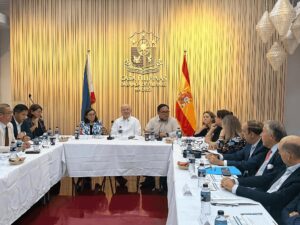
The Philippine Chamber of Commerce and Industry Human Resources Development Foundation, Inc. (PCCIHRDF), through the PCCI Education Cluster, convened educators, industry leaders, policymakers, and other stakeholders for a Round Table Discussion on the Proposed Reframing of the General Education (GE) Curriculum to strengthen the alignment between higher education and the evolving needs of the Philippine workforce.
The dialogue served as a platform to examine the Commission on Higher Education’s (CHED) proposed restructuring of the General Education curriculum, with participants exploring how the curriculum can respond to changing industry demands while preserving the critical thinking, ethical grounding, and broad-based competencies fostered by liberal education.
PCCI President Perry Ferrer underscored the importance of the curriculum review inpreparing Filipino graduates for an increasingly competitive and innovation-driven economy. “Let us take this opportunity to prepare our future leaders, our future unicorns,” Ferrer said.
Ferrer emphasized that reviewing the General Education curriculum presents an opportunity to eliminate repetitive competencies, strengthen learning outcomes, and ensure graduates are equipped with skills that match the realities of today’s labor market.
“As ASEAN continues to emerge as a hub for investment and innovation, the Philippinesmust position its workforce to seize the opportunities created by a more integrated regional economy,” he said.
Although the implementation of the revised General Education curriculum has been deferred to 2028, Ferrer encouraged educators, students, industry representatives, and other stakeholders to actively participate in shaping the reforms.
The roundtable featured DLSU Political Science Professor Dr. Antonio Contreras as the resource speaker, who provided insights on the proposed curriculum reforms and facilitated discussions among participants on the opportunities and challenges of aligning higher education with the needs of industry while preserving the broader objectives of General Education.
The discussion brought together members of the PCCI Board of Directors and the PCCI Education Committee, providing an avenue for the business community to exchange perspectives and identify recommendations that would help strengthen the relevance of higher education to the needs of employers and the broader economy.
The insights generated during the dialogue will be consolidated into a set of policy recommendations to be presented to the government during the 52nd Philippine Business Conference & Expo on October 13–14, 2026, at The Manila Hotel. Through these recommendations, PCCI aims to help ensure that the business sector plays an active role in shaping an education system that produces graduates who are employable, adaptable, and well-rounded.
“The curriculum we build today will define the workforce of tomorrow,” Ferrer said, emphasizing that meaningful collaboration among government, academe, and the private sector is essential to developing graduates who are employable, adaptable, innovative, and globally competitive.
The roundtable discussion forms part of PCCIHRDF’s continuing commitment tostrengthening industry-academe collaboration and advancing evidence-based education reforms that support workforce competitiveness, innovation, and sustainable economic growth.