Zephaniah “Khalid” Mesa: In an Era of Division, Choosing Love and Rediscovering Selflessness as the Heart of Our Nation
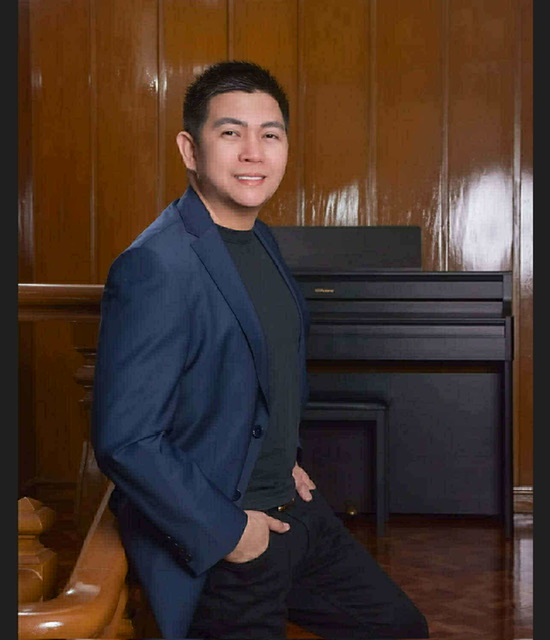
In a time when noise, conflict, and self-interest often dominate the nationalconversation, Zephaniah “Khalid” Mesa stands as a gentle yet powerful reminder ofwhat truly sustains a nation: love, faith, and selflessness.
A servant-leader, teacher, and man of deep conviction, Khalid’s life reflects a journeyof rediscovering purpose — a purpose anchored not on personal ambition, but on acalling to build people through compassion and faith.
Reclaiming the Heart of Leadership
For Khalid, leadership is not about position or privilege, but about service. “Whoeverwants to be great must be a servant,” he says, referencing Matthew 20:26–28 — a verse that guides his personal and professional philosophy.
He believes that genuine leadership mirrors the example of Christ — one that seeksnot to be served, but to serve. “The Son of Man came not to be served, but to serve and to give His life as a ransom for many,” he adds, his tone filled with quietassurance.
His dream is not only to lead, but to raise future leaders who will serve with humilityand vision. “My purpose is to train more leaders,” he shares. “If we can raise ageneration that chooses compassion over competition and character over comfort, then we’ve already begun to rebuild our nation.”
Faith as a Foundation of Nation-Building
Khalid’s philosophy is rooted in a powerful belief — that transformation begins withthe renewal of the heart. “We are in the process of change,” he says. “But it is not achange for the world’s approval, it’s a change led by the Word of God.”
He often likens his work to planting a mustard seed — small acts of kindness andintegrity that, when nurtured, can grow into something mighty and life-giving. “We must keep planting,” he says. “Because when faith takes root, love grows — andthrough love, people begin to see heaven on earth.”
For Khalid, being a Christian is not about religion, but about citizenship in God’skingdom. “We’re not members of denominations,” he explains. “We’re citizens ofheaven, called to bring heaven’s love and grace here on earth.”
The Legacy of Selfless Love
Khalid’s outlook on love goes beyond emotion — it’s a way of life. He believes thatlove, in its purest form, is selfless. “There is no greater love than to lay down one’s life for a friend,” he says, quoting John 15:13
In one of his analogies, he recalls stories of soldiers who throw themselves overgrenades to save others — a picture of the kind of love he believes the worlddesperately needs. “That’s what true love looks like,” he reflects. “It’s choosingothers above yourself. It’s the kind of love that transforms nations.”
To him, legacy isn’t measured by wealth or titles, but by the lives we’ve touched.“Legacy is not what you leave for people, but what you leave in them,” he says. “The love, values, and faith you plant in others — that’s what will outlive you.”
A Call to Choose Love
As the world grows noisier and the lines between faith, leadership, and ambition blur, Zephaniah “Khalid” Mesa’s message pierces through with quiet conviction — that truepower does not lie in dominance, but in compassion.
He reminds us that the greatest revolutions in history did not begin with anger, butwith love; not with weapons, but with willing hearts. “You cannot heal a nationthrough force,” he says. “You heal it by loving it — by choosing to serve, forgive, andgive even when no one else does.”
For Khalid, every act of kindness, every word spoken with grace, and every personwho chooses humility over pride becomes part of a greater movement — one thatrebuilds not only the nation, but the soul of its people.
In a time when it is easier to hate than to understand, easier to divide than to unite,Khalid’s vision calls us back to what makes us truly Filipino — the courage to lovebeyond ourselves.
Because in the end, nations don’t rise through power or policy — they rise throughpeople who love deeply, serve faithfully, and lead with selfless hearts.