From Fields to Plenary: How Local Producers Are Fighting to Reclaim the Rice Market
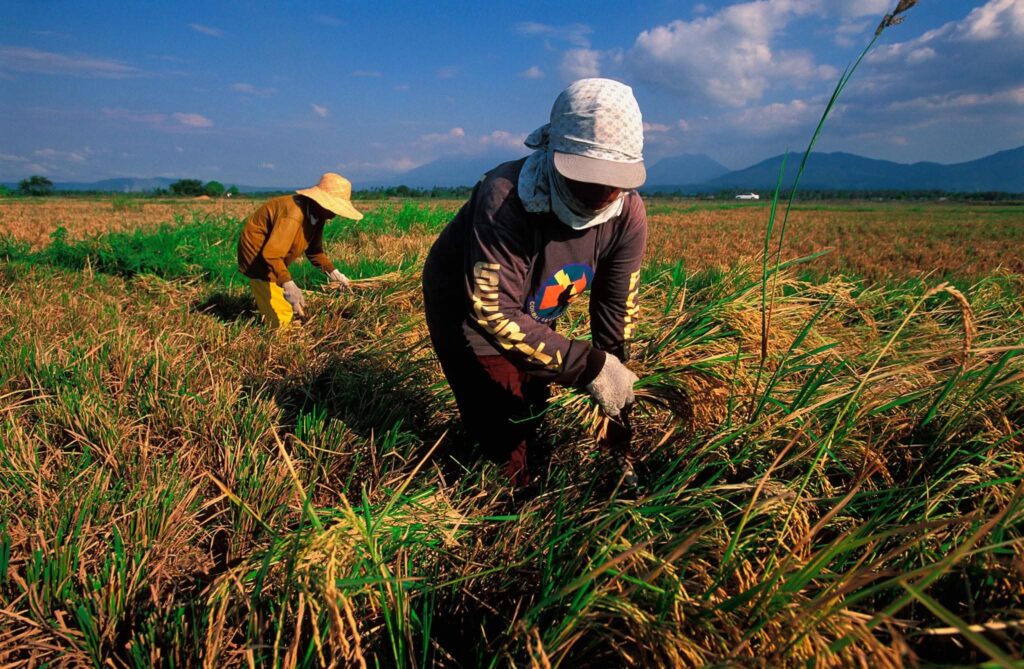
There was a time when the price of rice in the Philippines followed a predictable rhythm, but today, both the people who grow the staple and those who eat it find themselves at the mercy of a volatile market. Seeking to restore balance, major agricultural groups recently gathered at the House of Representatives to champion a legislative rescue mission: restoring the market intervention powers of the National Food Authority (NFA).
The pivotal moment unfolded during a hearing by the House Committee on Agriculture and Food, led by Quezon Representative Mark Enverga. On the table was the proposed Rice Industry and Consumer Empowerment (RICE) Act, a comprehensive measure consolidating 26 different proposals. At the heart of this legislative push is House Bill No. 1, championed by former Speaker Ferdinand Martin G. Romualdez, who argued that the current status quo is no longer sustainable for the country.
“Given the persistent price instability, warehouse congestion, and weakened palay procurement, there is now a compelling need to restore to the NFA some, if not all, of its original regulatory and market intervention powers.” — Hon. Ferdinand Martin G. Romualdez
For years, the local rice industry has operated under the Rice Tariffication Law (RTL). While intended to liberalize the market, agricultural leaders argue it has stripped the government of its shield to protect the public. Raul Montemayor of the Federation of Free Farmers reminded the committee that before the RTL, the NFA could strategically release its own rice stocks to cool down soaring retail prices. Now, he noted, retail prices bounce up and down unpredictably. The tragedy of this current system is that rice farmers, who ironically have to buy rice for their own families, are suffering alongside everyday consumers, while middlemen, traders, and importers pocket the profits. To fix this, Montemayor urged lawmakers to keep the best parts of past and present laws while discarding the failures.
The strategy for the NFA’s comeback, however, is about targeted defense rather than a total return to old monopolies. Jayson Cainglet, executive director of the Samahang Industriya ng Agrikultura (SINAG), explained that the NFA needs aggressive buying power at the local level. When private traders drop their buying prices too low, the government should step in and procure as much as ten percent of the local harvest to force market prices back up to a fair rate. However, SINAG drew a firm line against letting the NFA import or trade foreign rice again, insisting that taxpayer money should exclusively support Filipino hands, as importing rice only subsidizes foreign farmers.
With momentum building, Representative Enverga gave government agencies a one-week deadline to submit their final position papers. The committee is now moving quickly to finalize the bill and bring it to the House plenary, aiming to give Filipino farmers and consumers the stability they have long been waiting for.